
Steps
Adding Steps
To add a step within a task simple press the "+" icon!

Step Tabs
At this point, you have learned how to create tasks, steps with observations, and how to initiate a session. Now it is time to learn about the different functionalities within steps. The functionality of a step refers to the settings an author can modify to optimize the task and its capabilities. Within InSkill, step functionality is split into 3 unique categories; Content, Data, and Info.
Content:
- Where the main information being relayed to the user is stored. Details such as title and instructions are incorporated into the step in this tab.
Data:
- The area where observations from the prompt are stored and referenced. Storing of data occurs in the Feeback prompt while referring occurs in Dependencies.
Info:
- Step specifics are incorporated in this tab. While content prompts the main message you want the user to grasp, Data is where the author can provide more information about the step such as cost, necessary skills and tools, visibility, tags, and termination/continuation settings.
Content Tab
The main area of step personalization is found in the Content tab under Expertise of a product. In this tab, two main sections help guide the user through the step; title and instructions. This page also has other capabilities such as embedding code or documents to better guide the user through the step. Please go through the following definitions to get an introduction to step personalization in the content tab.
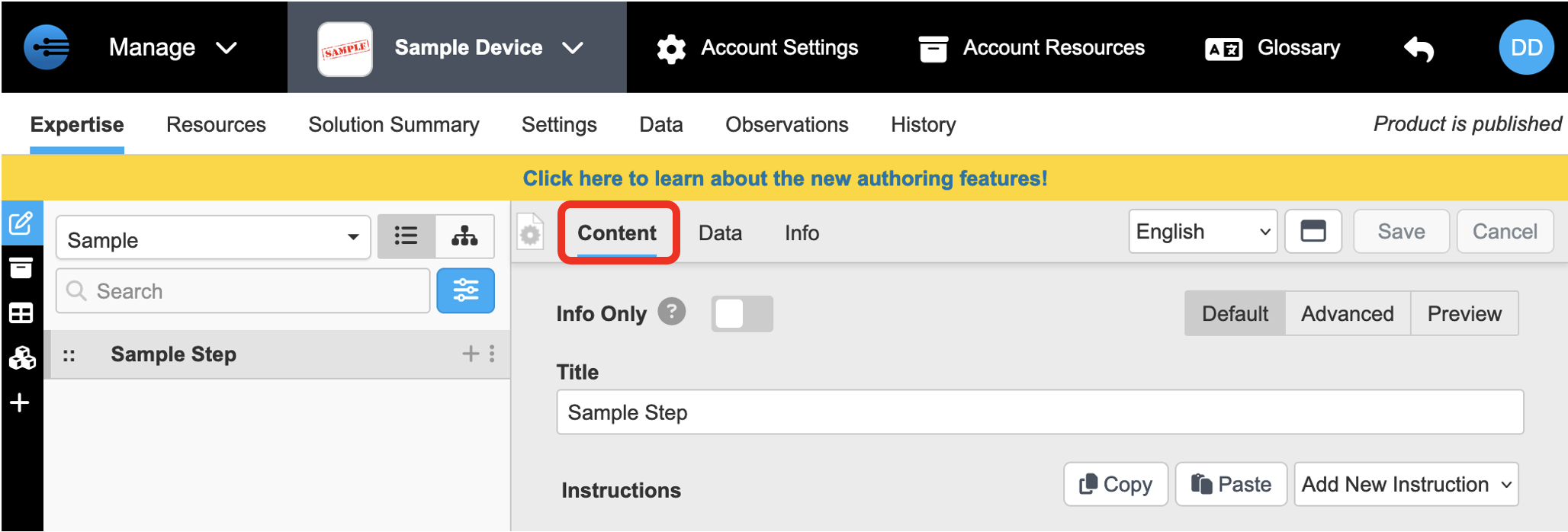
Title: The title of the step is a brief explanation of the step. What is entered in this prompt will appear at the top of the page.
Instructions: While the title is a brief overview of the step, the instructions are intended to add details that help the user complete the step. Instructions are added by selecting the drop-down arrow "Add New Instruction" which allows you to add an instruction using an image, resource, text, URL/email, or video. The following is a general template of an instruction. Instructions contain 3 pieces that together comprise an instruction; description, resource, and dependencies.
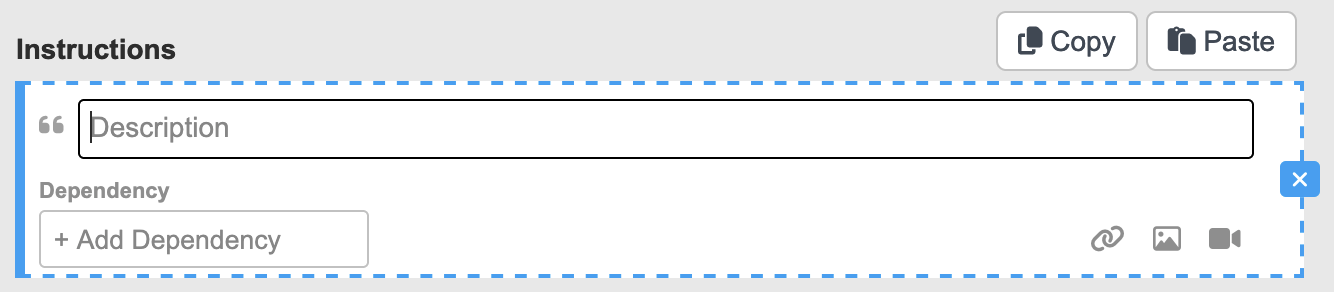
- Description | Specifics that the author relays to the user about how to complete a part of the step.
- Resource | An image, video, URL, or document associated with a specific instruction that is designed to help the user better understand the instruction.
- Dependencies | References to data that can be implemented to provide different instructions based on the answers they provided in their observations.
To add another instruction, hover over the dotted lines on either the top or bottom of the instruction and select the type of instruction you want to add. The top line adds an instruction above while the lower line will add an instruction below.
Info Only: Converts this step to an informational step without any user input. To create a step that provides instruction instead of solving an issue, enable "Info Only" at the top of the page.
- Enabled | Will have a continue button instead of 'Finished/Not Solved'
- Disabled | Creates the default solution-based procedure with 'Finished/Not Solved' determining the next step
Default vs Advanced vs Preview: This feature is located at the top right of the page and is designed to give liberty to the author for how they want to enter the instruction for the step.
- Default is the InSkill method of creating a step that is designed to be intuitive and help guide the user to create the instruction. This is the method that is seen above and works by prompting the author of the material they want to enter.
- Advanced is for creating the step in the form of a document or code editor. This gives the author more freedom in how they decide they want to build up the step by providing a blank canvas onto which they can design their instruction however they please. The visual editor is similar to a word document while the code editor is designed to handle code.
- Preview is for previewing the work you have input into either the default or advanced mode.
Data
The data tab is for collecting and referencing observations input by the user. It has two main functionalities associated with it; Feedback and Dependencies. Feedback, as covered previously, is InSkill's method for saving data input through observations. Dependencies, on the other hand, are references to specific observations recorded that allow for tailored procedures for the user depending on the answers they provide.
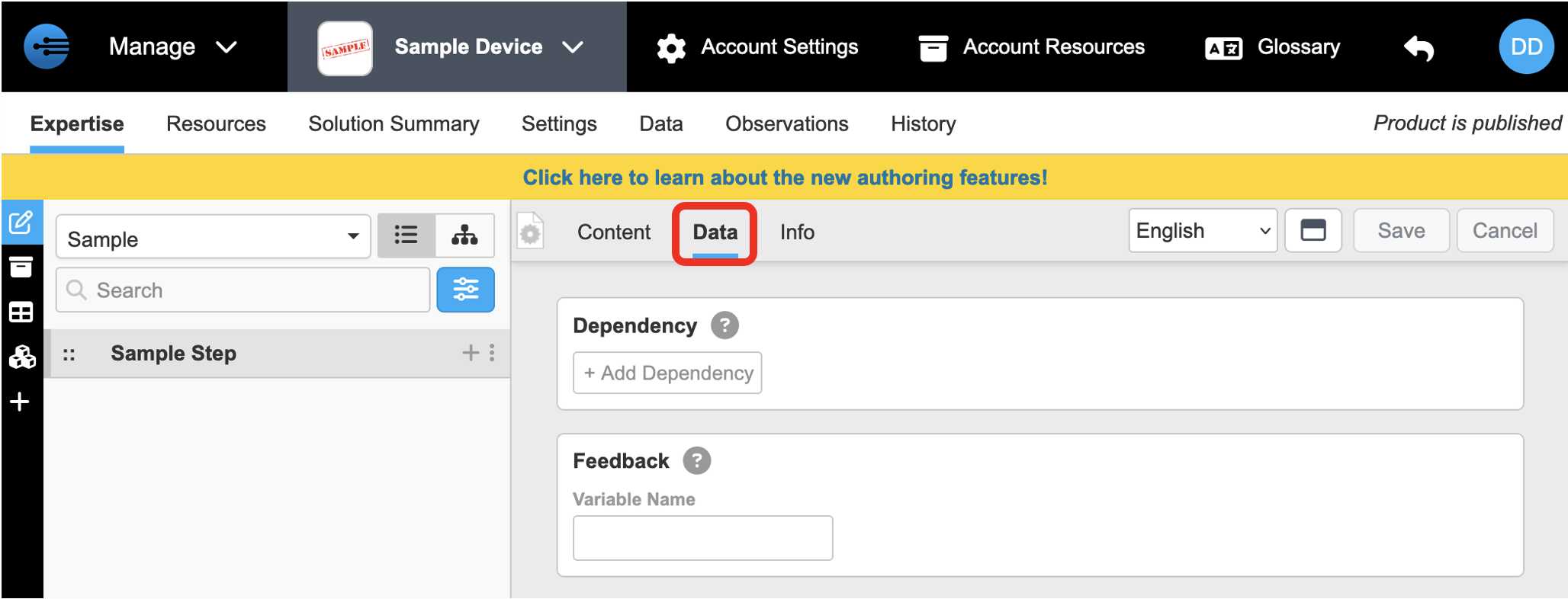
Feedback: As covered in previous sections, feedback is designed to prompt the user to input information while they are executing a task. This input comes in the form of yes/no statements, lists, floats, integers, photos, or strings. Feedback is stored to InSkill via variables which can be referenced through dependencies in future steps. Types of feedback can vary widely and are designed to collect important data such as error codes, experimental values, inspection dates, etc.
Dependency: Statements that reference previously collected observations and allow for feedback-dependent procedures. When using dependencies, the statement must be true for the step to be visible. This creates a dynamic set of procedures that only present relevant steps to the user. The following is the typical format for a dependency.
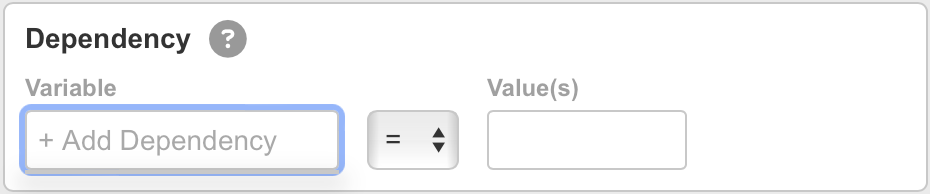
Dependencies are formatted by relating the variable to a particular value through a mathematical expression. If the statement is true then this step will be presented to the user. If the statement is not true, the step will be skipped and the next relevant step will be shown.
There are 4 mathematical expressions that are used in defining the relationship between variable and value.
| Symbol | Meaning |
|---|---|
| = | Equal |
| > | Greater Than |
| < | Less Than |
| != | Not Equal to |
Info
The info tab contains the rest of the information relevant to a step. It is designed to prepare the user with what is necessary to complete this step including cost, parts, and skills needed. In addition to this, the info tab is responsible for terminating a task through "Stop Here" and "Trigger script". Lastly, the info tab contains a setting that allows the hiding of specific steps from underqualified personnel. By using the functionality in this tab you can be assured that only qualified personnel will handle your system's high-level assignments and that they will be prepared to perform with the necessary skills, parts, and cost.
Please refer to the definitions below to better understand the functionality accessible under this tab.
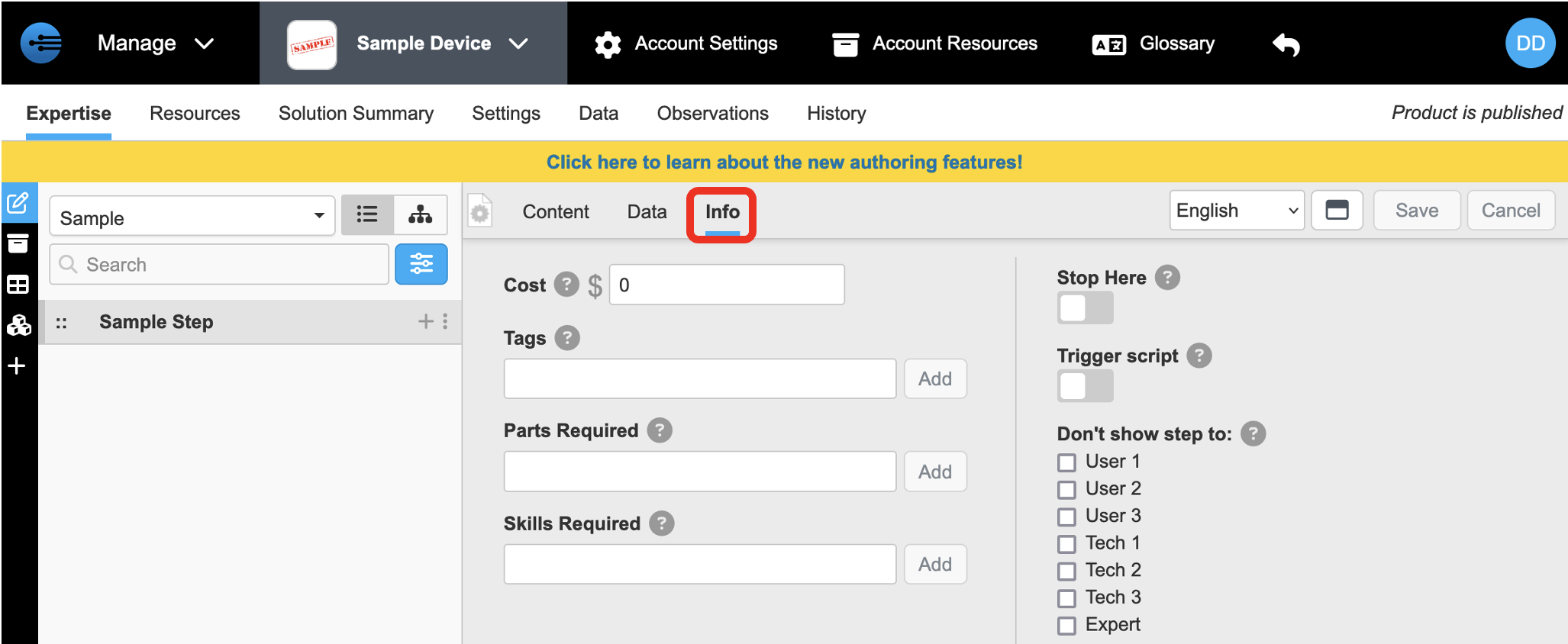
Cost: This refers to the cost associated with implementing this solution. This is typically the cost of replacement parts. It is also important to remember that InSkill Al prioritizes fast and low-cost steps first.
Tags: Tagging can be used to organize routing and workflow.
Parts Required: This lists the parts required to complete this step. This helps prepare the user by informing them of what equipment they will need before attempting the step.
Skills Required: This lists skills required to complete this step. This helps ensure that the correct workers with qualified experience are the ones handling the execution of the step. If people with the skill set are not present during the step, then the step should not be executed.
Stop Here: Stop here is designed to end the task. If set, this step will not have any steps following it.
Trigger Script: This step triggers the product 'session finished' script if it exists.
Don't show step to: Functionality that prevents selected roles from seeing the current step. This can be used to ensure that only the qualified personnel handle/execute the step.
Updated 2 months ago